


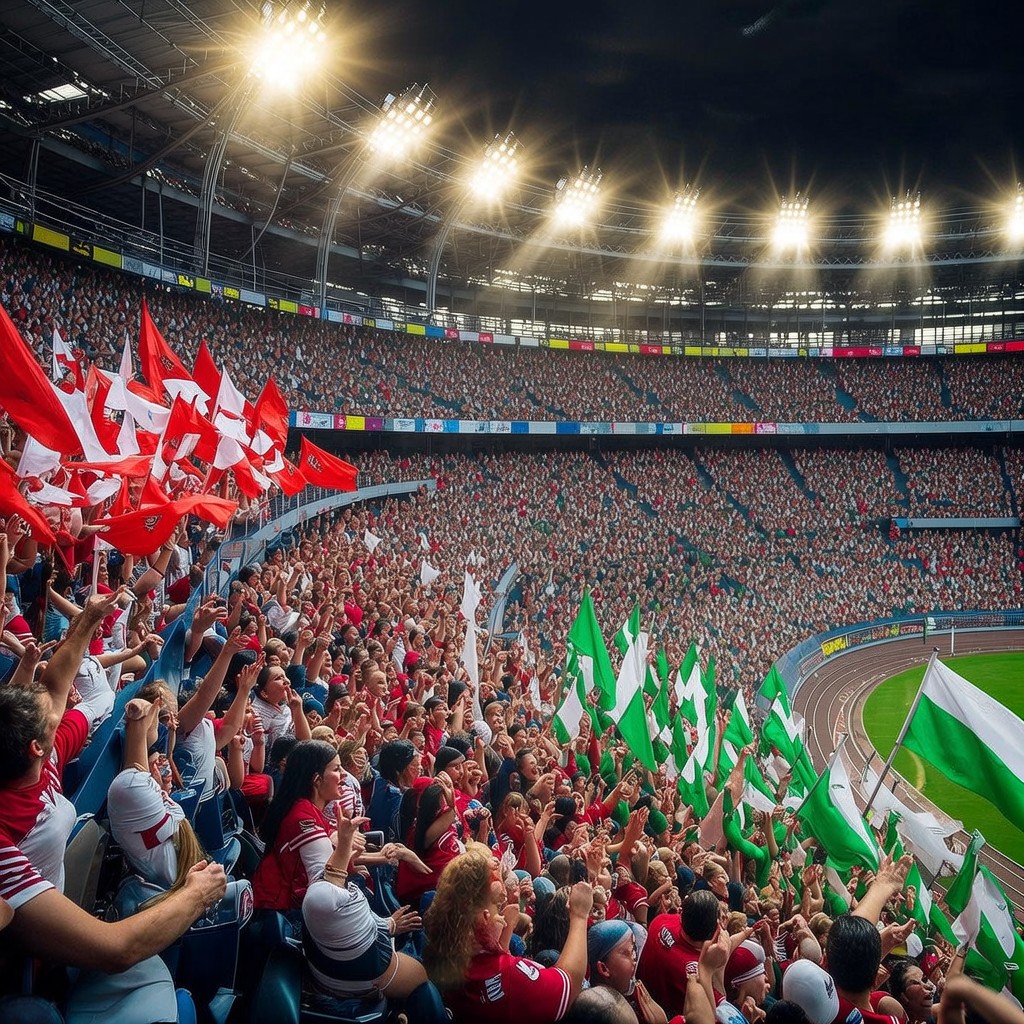
There are a total of 316 square kilometers of land mass that comprises Malta, an island located in the deep Mediterranean Sea. However, it is fascinating that this island has the ability to squeeze an entire football (soccer) war within its borders. Not one team, but dozens. Every town square possesses a club, a color, and a grudge that is older than most of the people standing in the square.
When people check Champions League betting odds, they usually picture Europe’s biggest stadiums in Madrid or Munich. In Malta, however, football’s true spirit is found on a Sunday afternoon in Paola where two hundred people can create more noise than a forty thousand people stadium. That gap, between the number of people and the volume of the feeling, is the whole point.
Photo above – source: Depositphotos
Two hundred people, one endless grudge
The longest-standing rivalry can be found in Valletta’s matches against Floriana. Both clubs were founded a stone’s throw away from one another at the entryway to the capital. They are separated by a few bastion walls and around 100 years of disdain. The Beltins wear white, while the Greens don green and white. Locals refer to this match simply as “the derby”, as though there has only ever been one derby. This rivalry predates Malta’s independence. Grandfathers hand down support for this match like a family surname, and a negative result can darken an entire street for an entire week.
There is the rest of the aristocracy. Sliema Wanderers and Floriana shared the first decades of their history, both being the most successful names on the island. Valletta dominated large portions of the modern era and collected title after title. Hibernians from Paola, turned the black and white colors into a dynasty. Birkirkara, the Stripes, pulled themselves up from almost nothing to win their first championship in 2000 and have ever since remained a top-tier team. A small island with a long memory and no forgiveness.

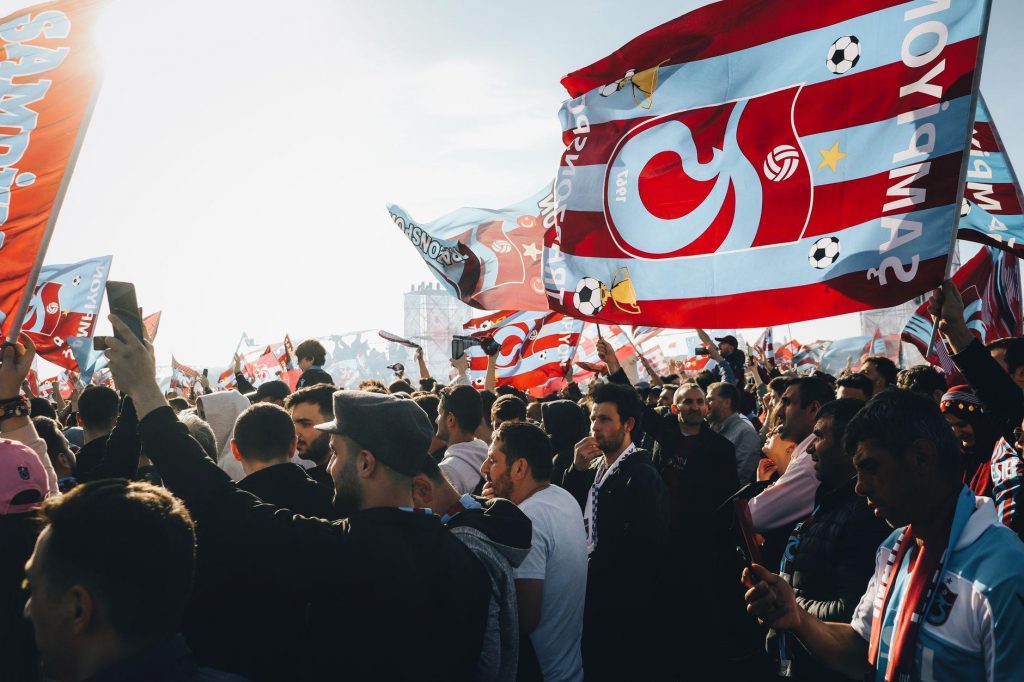
Football atmosphere. Photo: Beyza Kaplan / Pexels
Everything funnels through Ta’ Qali
Very few outsiders notice this. Most Premier League games are not held at a club’s home ground. Instead, they occur at the National Stadium in Ta’ Qali, which opened in 1981. This stadium is a neutral venue located in the center of the island, and almost the entire league uses it for their turns. The clubs are village-sized. There are very few proper-sized spectator stands. Thus, football pools into one venue.
It is a curious yet wonderful experience. On one piece of grass with one set of goal mouths and one set of fans, three different fixtures can be played and each fan gets to take their cathedral for ninety minutes before they pass the keys to the next set of supporters. The pitch has no allegiances, but people bring in all the drums and flares, and flags made by some aunt.
The feast, the band club and the fixture
In Malta, the village identity does not start with football. It starts with the parish, the summer festa, and rival band clubs that spend the entire year disputing whose saint is greater, whose fireworks are more impressive, and whose square is the real epicentre of the universe. Football just fits into an already established machine. The colours and tribalism were present long before any ball was kicked.
The foreign obsession is every bit as timeless. It has been a generational trait of Maltese homes to have an Italian channel as a source of TV programming, so no surprise a Juventus or Milan shirt hangs in the bedroom right next to the local club’s scarf. Two loyalties, one wall, no debate. The island learned to love the European giants and the little ones from down the road at the same time.

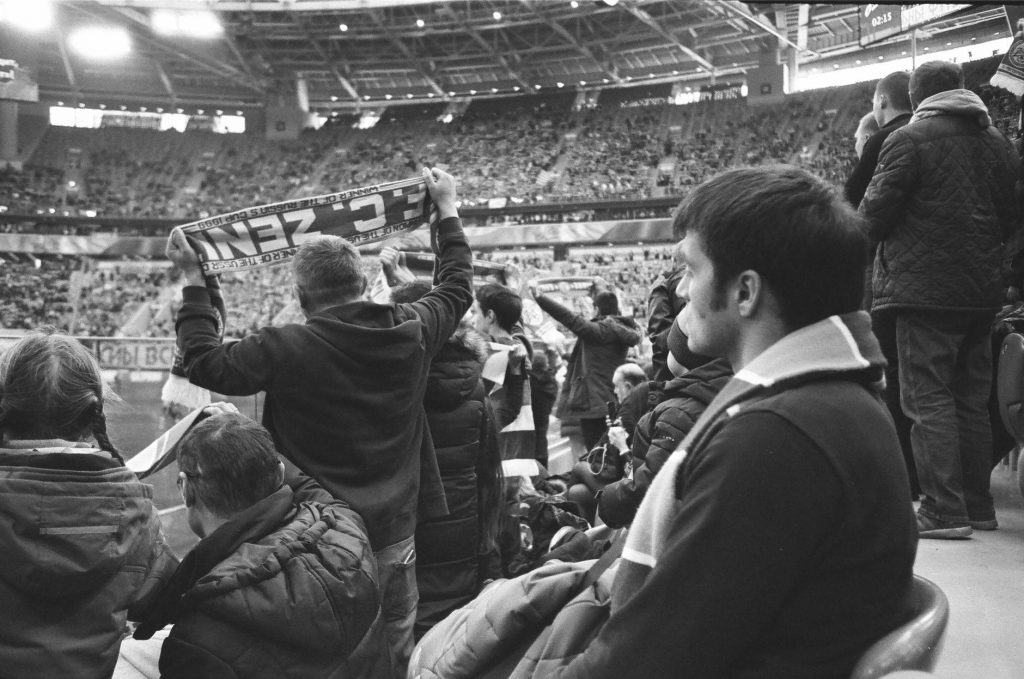
Football fans. Photo: Darya Sannikova / Pexels
Small island, outsized football habits
The shape of it comes down to a handful of stubborn local facts:
- The map of Malta can be interpreted as a map of rivalries since nearly every community has a club.
- There may only be hundreds of people in the crowd, but the drums, flares, and chanting are well above the headcount.
- The National Stadium is home to many of the top-flight games, making neutral ground, sacred ground for both teams.
- The colors surpass the teams in the standings. Beltin’s White, Floriana’s Green, and Hibernians’ Black and White are identities before they are jerseys.
- The sporting tribalism began with parish festas and rival band clubs with disputes over saints and fireworks.
- The obsession operates simultaneously on two engines: the local league at our doorstep and the European giants on the screen.
Why the island’s heart beats in a foreign competition
Despite the pride the village may feel, the Maltese beings their gaze to the north. For generations, Serie A has been a quasi-religion on these shores, close enough to feel like a neighbour while English football is a bar fixture on a Saturday. However, nothing unites the island like the Champions League. On those Wednesdays, the pastizzi shops do a roaring trade, and half the country disputes about which side of the parish Real Madrid belong to.
That is where the punting comes in, and this is no small matter. Following the Champions League betting odds gives a fan in Birkirkara a feeling of being connected to Munich or Manchester instead of watching from the sidelines. Plenty will size up the numbers at https://vivatbet.ie/en/line/football/118587-uefa-champions-league before a big midweek tie, weigh up a longshot, then walk to Ta’ Qali on Sunday to scream for two hundred euros of village glory. Inhabitants of this place appear to be comfortable with the presence of both an elite and an amateur mentality concurrently, without any hint of a contradiction.
An island that plays for keeps
Malta recognizes its limitations when it comes to winning a European group in football. Therefore, it is not a big deal. Celebrating victories is not what Malta football is about. Rather, it is about the passion of small crowd, the excitement of a family heirloom piece of Malta memorabilia, and the excitement of the crowd at Ta’ Qali when a striker from a neighbouring parish accidentally scores a goal.
None of this will appear in the league table or on the betting slip. It exists in a band club at midnight, in an altercation over a still-uncooled 1980s cup final, in a scarf that will outlast the man who knitted it. That, not Madrid, is what a Sunday in Paola is about.