


Why statistical models find the Maltese Premier League harder than the big divisions: a short sample, a split season and fixtures bookmakers never price.
A statistical model reads a Maltese Premier League fixture with the same code it uses on Serie A, and it comes back with a weaker answer. The reason sits in how much evidence the league produces and how that evidence is arranged, rather than in the quality of the football on show. For anyone who follows the domestic game and wonders why the larger prediction services either ignore Malta or treat it as an afterthought, the mechanics are worth setting out.
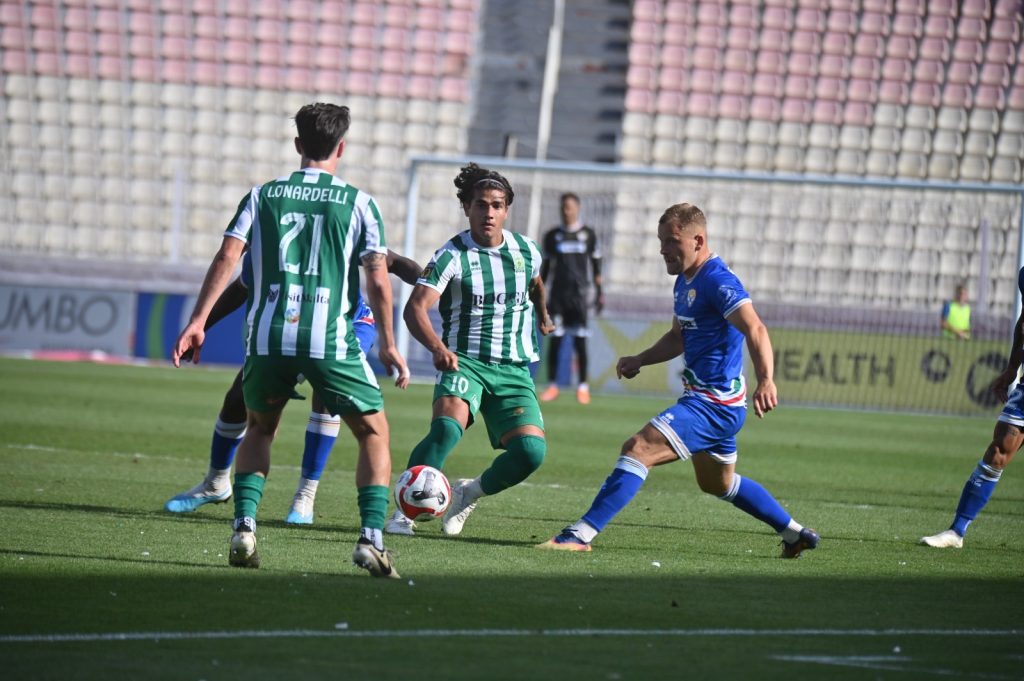
Photo: Copyright www.stephengatt.com
The sample is small, and the calendar makes it smaller
Twelve clubs contest the Maltese Premier League. The Opening Round runs to eleven match days on a single round robin, after which the top six and the bottom six separate into groups of five further matches with points carried forward, and the Closing Round repeats the same structure. A club therefore plays thirty-two league matches across a full season, against thirty-eight for a side in England.
The raw count is the smaller half of the problem. Splitting the table means the second phase of each round is played against a filtered set of opponents, so four straight wins in the top six group and four straight wins in the play-out group are not remotely the same evidence. A model that reads recent form as a plain sequence of results will overrate the second team every time. The correction is to price opponent strength into every result before form is calculated at all, and that single design choice separates a model that travels to small leagues from one that only looks like it does.
Team strength moves faster than the record can confirm it
Rating systems assume a club’s underlying strength changes slowly, which is what makes a long record of results informative about the next match. In a division of this size, one arrival or one departure can shift a side’s expected goals for and against by more than a season of gradual drift would, and there are rarely enough fixtures left in the round to confirm the new level. The model then works from a rating built largely on a version of the squad that has already changed.
That is the general condition of any league where squads are small, contracts are short and one player carries a visible share of the goals. It bites harder in Malta because the season offers fewer matches in which to notice.
The missing bookmaker price
The second opinion a model normally has is the betting market. For the major European leagues, prices appear days in advance, and a forecast that disagrees sharply with them is a signal to check the inputs before publishing anything. For smaller leagues the prices arrive later, if at all, and a model that publishes three days out is regularly ahead of the market.
That is measurable rather than anecdotal. The same model that produces our football predictions for the major European leagues also reads the full Maltese fixture list. On 3 September 2026, three days ahead of Birkirkara against Sliema Wanderers and Hamrun Spartans against Zabbar St. Patrick on 6 September, its stored snapshot held a complete projection for both matches and not one bookmaker price for either.
The absence is usually filed as a data failure. It is closer to an accurate description of the league’s commercial footprint, and a model with no market to argue against is working alone. It should say so.
The honest output is a range
In that same snapshot, the model’s stored output gave Birkirkara 41.3 percent, the draw 31.2 percent and Sliema Wanderers 27.4 percent. Almost a third of the probability sat on the draw, which is what a well-behaved model should return for two familiar sides of broadly comparable level.
Familiarity is the part outsiders miss about Malta. Under the current structure two clubs in the same half of the table can meet four times in the league phases of a single season, before any playoff. Squads know each other, coaches prepare for the same opponents repeatedly, and the variance a model leans on to separate the good sides from the lucky ones gets compressed. A 41 percent home probability in that setting is the model reporting a league in which the gap between third and eighth is genuinely narrow, and it deserves to be read at face value.
Superior Tips publishes a projected scoreline, an alternative scoreline and a confidence figure on each match page rather than one line of advice, freezes that forecast before kickoff so the result can never rewrite it, and keeps a public graded archive that carries the losses alongside the wins. For a league like Malta’s, that matters more than it does for the Bundesliga, because the confidence figure is the part carrying most of the information.
What would improve it
More match-level data, collected consistently and kept for several seasons. A model that only sees final scores is reading the least informative summary of ninety minutes available. Shot volume, chance quality and where those chances came from separate a side that won 1-0 while being outplayed from one that deserved three, and across a thirty-two match season that distinction is the difference between a usable rating and a noisy one. Those inputs have existed for the major leagues for a decade or more, while coverage of smaller European divisions has improved without reaching the same depth. Malta sits inside that gap.
The shortfall shows up most sharply in correct score predictions, where a model has to land two numbers at once and every missing input costs it twice over.
Reading a Maltese forecast
Treat any Maltese Premier League forecast as a range rather than a verdict. A model returning 41 percent for the home side in a twelve-team league with a split season is being accurate about its own uncertainty, and that number carries more for a reader than a confident single call the underlying data cannot support. The clubs are close, the sample is short, and the market that normally corrects a model is largely absent. Any forecast that hides those three facts behind a clean answer is offering a certainty the Maltese game does not produce.