
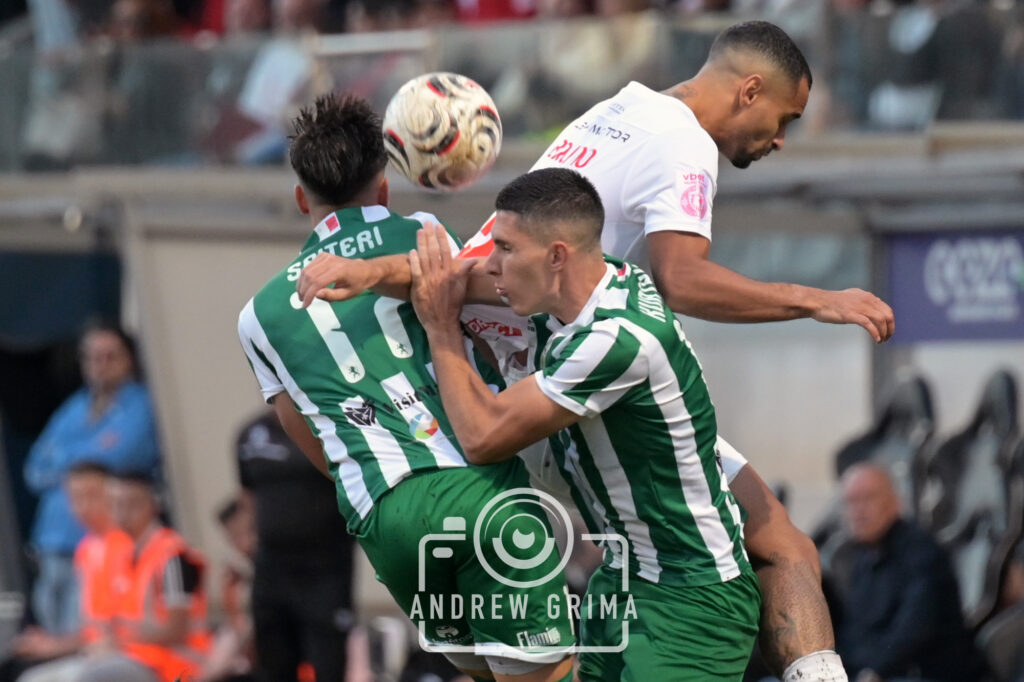
If Malta has a talent for making an impression beyond its size, football and gaming offer two rather different examples. One involves packed terraces, local rivalries and the eternal conviction that the referee has something against your club. The other involves software developers, international operators and technology companies serving customers across borders. They might appear to belong to different worlds, yet both have become important parts of modern Maltese life, and their paths often cross.
Football’s roots on the islands are considerably older, of course. Valletta, Floriana, Sliema Wanderers, Hibernians, Birkirkara and Ħamrun Spartans are more than names in a league table. They represent communities, family traditions and arguments that can carry on long after the final whistle. With rival supporters often living only minutes apart, local football feels wonderfully personal. You don’t need a 70,000-seat stadium to make a derby feel important.
Still, there is a difference between loving football and actually watching the local league. A Sagalytics survey commissioned by the Malta Premier League in October 2026 found that 77.2% of Maltese adults follow international football, compared with 56.7% who follow Maltese football. Among local football followers, Valletta and Ħamrun Spartans shared the largest support, each attracting 19%. Television remained the most common way of following the league. Local clubs compete for attention with the Premier League and Serie A.
The stadium figures nevertheless offer grounds for encouragement. The Malta Football Association reported that 184,056 spectators attended matches across the Premier League, Challenge League and National Amateur League in 2024/25, with domestic cup competitions attracting another 29,015. Together, those competitions drew 213,071 attendances, 26% more than the previous season. Premier League crowds alone were up 21%. Those figures count visits rather than individuals, but show that supporters will still turn up.
One reason is that Malta’s top division has become an unusually elaborate competition. The twelve-team VBET Malta Premier features an Opening Round and Closing Round, with each initially dividing into a Top Six and Bottom Six after eleven fixtures. Another five matches follow in each group, with points carried forward. It is a format that might require a diagram in the pub, but produces fresh turning points. In November 2026, eleven clubs voted to retain the system for another five seasons, while a proposed switch to two-legged deciding play-offs failed on a 6–6 vote.
The matches themselves have hardly been short of drama. On 20 November, Mosta found themselves two goals behind against Balzan before changing four players at half-time and winning 3–2. Adolphus Eugene Ebere scored twice, including the winner in the 74th minute. Two days later, Marsaxlokk beat Hibernians 1–0 to move within a point of leaders Valletta. Such results become Monday-morning talking points. Nobody watching Mosta trail 2–0 could have known the evening would finish with their supporters celebrating a comeback.
Malta has enjoyed bigger moments on the European stage too. In 2025, Ħamrun Spartans became the first Maltese men’s club to reach the league phase or group stage of a UEFA club competition, qualifying for the Conference League. For local supporters, it was a milestone worth savouring. Maltese European Commissioner for Sport Glenn Micallef, speaking to UEFA in November 2026, described it as “a historic moment for Maltese football”, arguing that sporting merit gives smaller nations the chance to dream on a bigger stage.
Behind the headline results, the real work is often less glamorous. The Malta FA reported in November 2026 that more than 57,000 students had participated in football programmes associated with the Inħobb il-Futbol Foundation between the 2022/23 and 2026/27 seasons, through over 4,000 sessions. Its wider domestic youth programme benefits approximately 10,000 boys and girls from Under-12 to Under-21 level. These numbers matter because success in European competition cannot be built entirely on an occasional good transfer window or a fortunate draw.
The association has also proposed its GoPRO reforms, designed to keep more youngsters playing and make the route into senior football clearer. Its annual Youth Development Fund is set to double from €250,000 to €500,000 under the proposals. Malta FA senior vice-president Dr Matthew Paris put the urgency plainly: “We cannot afford to lose a single player.” With just over 15,000 people affiliated to the association, approximately 2.75% of the population, the country has to develop the talent it already possesses rather than assuming another generation will simply appear.
Meanwhile, another industry has put Malta on a very different international map. The Malta Gaming Authority’s 2025 figures estimate that gaming contributed €1.42 billion in gross value added, around 6.3% of the national economy. Direct and indirect employment linked to the industry stood at approximately 19,150 people, equivalent to about 6.5% of the workforce. The MGA recorded 302 licensed companies holding 311 licences at the end of that year. This is a sizeable technology-and-services industry, not merely a collection of casino floors and betting shops.
There is an obvious connection with sport. Malta hosts companies involved in odds, gaming platforms, payments, compliance, data and customer services, while domestic football has increasingly adopted commercial sponsorship and digital ticketing. The name VBET Malta Premier is itself a reminder that the two sectors sometimes meet before a ball has been kicked. For clubs trying to improve facilities and attract supporters, commercial partnerships can be valuable, provided sporting independence and integrity remain non-negotiable.
That last point deserves more attention than the usual debate about which team will win on Saturday. In October 2025, the Malta Gaming Authority published a review of betting on Maltese football covering the 2023/24 season. It found a relatively modest market, concentrated mainly on match-result and total-goals wagers, with limited participation by Maltese customers. So despite the size of Malta’s gaming industry, it would be misleading to suggest every local fixture attracts enormous betting volumes. Being an international gaming centre does not automatically make domestic football a global betting phenomenon.
The distinction between football and casino games is worth understanding, too. A football result depends on players, tactics, injuries, pressure, refereeing and those wonderfully inconvenient moments when a defender slips over at precisely the wrong time. Roulette operates according to a fixed set of possible outcomes. For a straightforward illustration of the latter, this page shows different roulette formats on Fruity King, a UK-facing casino brand operated by ProgressPlay, a Malta-registered company with Maltese and British gambling licences. The connection is commercial and technological, not a suggestion that watching football makes roulette outcomes any more predictable.
Football teams can adapt, learn and come back from two goals down; a roulette wheel cannot change its tactics at half-time. Both can provide suspense, but previous roulette spins do not influence the next result. Real-money games are adult entertainment with financial risk, not a substitute for following sport.
That matters because the audience is there to be won. In the October 2026 Malta Premier survey, 57% of respondents believed the league’s brand had improved, compared with only 5.6% who thought it had worsened. Yet funding remained the biggest concern, mentioned by 43%, while respondents also called for more local-player development and better conditions for watching football. This is the challenge facing club administrators: turn goodwill and occasional big-match excitement into a habit, without losing the fierce local identity that makes Maltese football worth following in the first place.
There is a regulatory challenge on the gaming side as well. In its 2025 annual report, the MGA recorded 280 suspicious-betting reports from licensees, circulated 192 alerts following its risk-based assessment and participated in 66 investigations internationally. MGA chief executive Charles Mizzi summed up the approach in July 2026: “The challenge facing regulators today is not to regulate more, but to regulate better.” For football, credible monitoring and cooperation matter because a sport built on unpredictability still depends on supporters believing the competition is fair.
Malta FA president Bjorn Vassallo expressed a parallel idea when introducing the association’s 2025–28 strategy, describing it as “a shared vision for everyone who loves and enjoys the game”. The plan focuses on football development, stronger facilities, commercial sustainability, visibility and good governance. It may not sound as exciting as a stoppage-time winner, but those are the foundations that allow such moments to mean something for years rather than disappearing after the celebrations end.
Malta’s football and gaming sectors are not the same industry, and there is no reason to pretend otherwise. One is built around the contest on the pitch and the communities that support it; the other is an international business built around technology, entertainment and regulation. What links them is a small country finding ways to compete, attract attention and make the most of its resources. For Maltese football, the greatest prize remains straightforward: more people through the turnstiles, more young players making the first team and more nights when the final whistle brings a result nobody saw coming.