
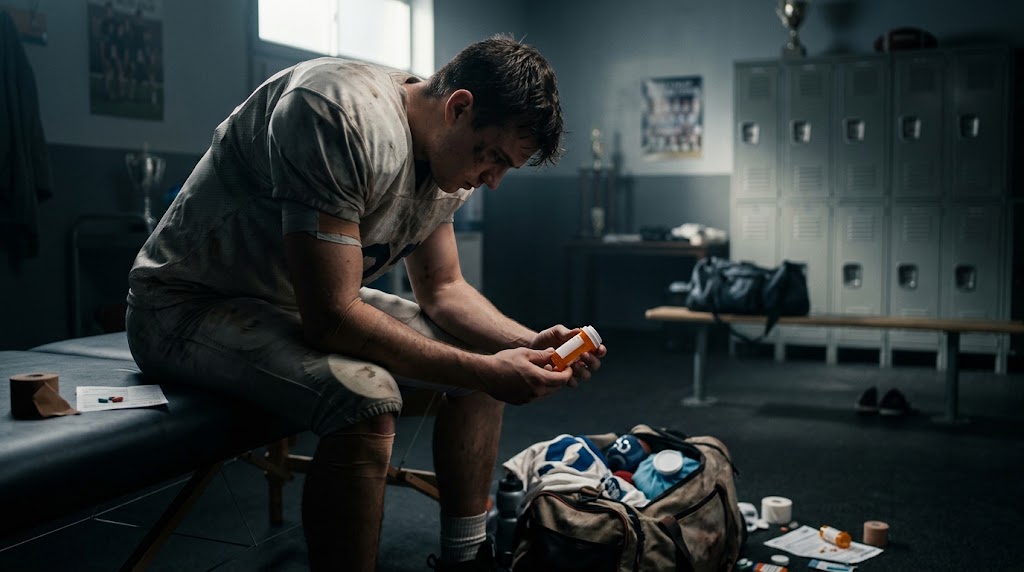
Sports injuries are an unfortunate reality for many athletes, from professionals competing at the highest level to people taking part in recreational activities. While appropriate pain relief can play an important role in recovery, certain prescription medications can carry a risk of dependence and addiction. Understanding this connection is particularly important for athletes who may face pressure to return to competition quickly.
The relationship between injury, pain medication and addiction is complex, but recognising potential warning signs can help athletes access support before a problem develops, especially as it can ultimately ruin careers, even after the injury has healed.
Rehab UK and many addiction treatment centres across the country see similar types of cases arrive to get help, and the links are often similar and follow similar traits…
When Pain Becomes Part of Sport
Athletes can experience anything from minor muscle strains to serious injuries requiring surgery and lengthy rehabilitation. Pain can affect sleep, mobility and mental wellbeing, making recovery particularly challenging.
In some circumstances, doctors may prescribe medication to manage significant pain. Opioid medicines, for example, can be effective for certain types of severe pain but can also lead to dependence, particularly when used for longer than intended.
The fact that a medication has been prescribed does not mean someone will automatically develop an addiction. However, athletes and medical teams need to be aware of the potential risks.
The Pressure to Return
Professional sport can create an environment where athletes feel considerable pressure to return to competition as quickly as possible.
Contracts, selection, team expectations and personal ambitions can all contribute to this pressure. An athlete may worry that a lengthy absence could affect their career or result in someone else taking their place.
This can make pain management particularly complicated. If medication allows someone to train or compete before their body has fully recovered, there can be a temptation to rely on it to maintain performance.
Managing the underlying injury and following appropriate medical advice should remain the priority.
How Dependence Can Develop
Dependence and addiction are not necessarily the result of one decision. They can develop gradually.
Someone may initially take medication exactly as prescribed but later find themselves thinking about their next dose or feeling unable to cope without it. Tolerance can also develop, meaning a person may feel they need more of a substance to achieve the same effect.
For athletes, the situation can be complicated further by the fact that medication may initially have a legitimate medical purpose. Distinguishing between appropriate pain management and problematic use can sometimes be difficult.
The Mental Health Connection
Injuries can affect more than an athlete’s physical health. Being unable to train or compete can lead to frustration, isolation, anxiety or low mood.
For someone whose identity is strongly connected to sport, an injury can feel like a threat to their career and sense of purpose.
These emotional difficulties may increase the temptation to use medication, alcohol or other substances as a way of coping. Addressing an athlete’s mental wellbeing alongside their physical rehabilitation can therefore be an important part of recovery.
Recognising Warning Signs
There are several signs that medication use may be becoming problematic. These can include taking medication more frequently or in larger amounts than prescribed, becoming preoccupied with obtaining more, visiting multiple healthcare providers to request medication, or continuing to use it despite experiencing negative consequences.
Changes in mood or behaviour can also be worth noticing, particularly when combined with changes in medication use.
These signs do not necessarily prove that someone has an addiction, but they can be a reason to seek professional advice.
Prevention and Support
Clear communication between athletes, doctors, physiotherapists, coaches and other members of a sporting support team can help reduce risks.
Medication should always be taken according to professional advice, and athletes should not adjust their dosage or stop taking certain medicines suddenly without speaking to an appropriate healthcare professional.
Mental health support can also be valuable. Counselling or psychological support may help athletes manage the frustration and uncertainty associated with injury without relying on substances.
Looking Beyond the Injury
Pain management is an important part of sports medicine, but recovery should involve more than simply controlling symptoms.
By combining appropriate medical treatment with rehabilitation, psychological support and realistic expectations around returning to sport, athletes can reduce some of the pressures that may contribute to problematic substance use.
Ultimately, an injury should not become the beginning of a second health problem. Understanding the potential relationship between pain medication and addiction can help athletes make informed decisions and seek support when they need it.