
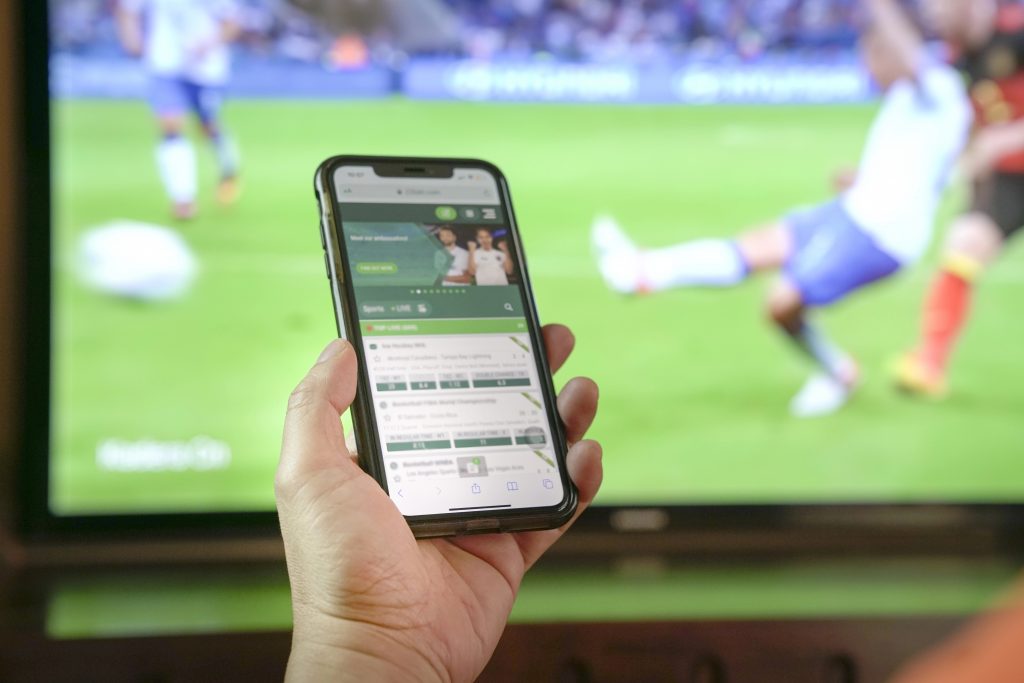
Go into any bar on a match night and count the phones. Go on, try it. You’ll probably run out of fingers before the first half is over. Somebody’s checking the score from another game, somebody’s arguing in a group chat, and at least one bloke in the corner is muttering at his screen because the price on a second goal just dropped.
A lot of that is down to mobile betting. Not all of it, to be fair. People had phones out at matches long before any bookie built an app. But being able to stick a bet on in about four seconds, from the sofa or the terraces, has changed how plenty of fans actually sit through ninety minutes.
So what’s really different now? And is it a good thing for the game? Depends who you ask, really.
Photo source: Depositphotos
From Pre-Match Slips to Mobile Betting in Real Time
Older fans will remember how it used to go. You’d pop into the shop on a Saturday, fill in a slip, maybe have a punt on a first scorer, and that was that. Once the game kicked off, your bet was locked. You just watched and hoped.
Apps changed that completely. The betting now carries on as the game does. Next goal before the hour? Next corner? A booking before half-time? Prices move with every attack, and the phone becomes a sort of live scoreboard with odds attached.
Funny thing is, it’s made some casual viewers watch more closely. If you’ve got a few quid on the next throw-in (yes, people do bet on that), you suddenly notice which full-back keeps getting caught upfield. You start reading the game a bit, even if you’d never call it tactics.
The Second Screen Became the Main Screen
Here’s the bit that surprised me. For a lot of younger fans, the telly isn’t really the main event anymore. eMarketer says 58% of 18 to 34-year-olds use a second screen while they stream live sport. For adults overall it’s 39%, which is still a lot of people half-watching.
And they’re not just betting. They’re watching a replay of the penalty shout, checking how many shots their striker’s had, sending a meme to their mate who supports the other lot. The bet is just one more tab.
Deloitte found much the same thing in its sports industry outlook. More than 90% of Gen Z and millennial fans they surveyed use social media to keep up with sport. So the phone’s already out. Betting slots in because it’s right there.
What Fans Actually Do on Their Phones During a Match
Ask ten fans what they’re doing on their phone mid-game and you’ll get ten slightly different answers. That said, a few things come up over and over:
- Checking the odds straight after a goal, a red card or a bad-looking injury
- Small in-play bets, usually on what happens next rather than the final score
- Hitting cash-out to bank a win (or stop the bleeding) before the ninetieth minute
- Looking at live numbers – possession, shots, xG if they’re that way inclined
- Screenshotting a bet slip and dropping it in the group chat, mostly to brag
None of it takes long. A couple of taps, then eyes back on the pitch. That’s partly why it caught on so fast – it doesn’t really feel like you’re missing anything.
How It Changed the Mood Around Local Football
It’s not only the big leagues either. Even smaller domestic games now pull in people who’d never have bothered before. A result like the recent entertaining draw between Marsaxlokk and Hamrun gets followed live by fans who aren’t anywhere near the ground, and some of them have a market open while they do it.
You get a new sort of follower out of that. Somebody who wouldn’t care less about a mid-table fixture suddenly keeps refreshing the score because there’s a fiver riding on it. Is that a “real” fan? Hard to say. But they’re paying attention, and that counts for something.
There’s a downside, though, and it’s worth being straight about it. When your phone keeps buzzing with new prices, it’s very easy to end up watching the odds and not the football. Plenty of old-school supporters reckon it’s taken a bit of the soul out of standing together in the stands. They’re not entirely wrong.
What Happens Behind the App
Most punters never give a second thought to what’s going on under the hood. It’s a lot, though. Odds need to update in a second or two, payments have to clear fast, and the whole thing can’t fall over when thousands of people try to bet on the same penalty.
Building that yourself takes years, plus a big team and a lot of money. So a fair few newer sportsbook brands don’t bother. They rent the engine and put their own badge on it. Through white label betting software integration, a provider like Kanggiten hands over the sportsbook core, the payment hookups and the odds feeds. The operator then gets on with the stuff it actually knows – its brand, its marketing, its local crowd.
Fans rarely think about it, but they notice the difference. Smaller apps stay up during the big moments, bets settle faster, and features like live streaming and bet builders aren’t just a big-bookie thing anymore.
Responsible Play Matters More When Betting Never Stops
Easy access is a double-edged thing. If a bet is two taps away, so is the next one, and the one after that. That’s why pretty much every licensed app now has deposit limits, time-outs, reality checks and self-exclusion tucked away in the settings.
Fans should switch them on. Seriously. One rule that works: decide what you’re happy to lose before kick-off, and don’t touch that number, no matter what happens in stoppage time. The football’s the main thing. The bet is a side order.
Where Live Football Viewing Goes Next
Watching and taking part will probably blur together even more. Broadcasters are already playing around with streams that put stats, polls and live prices right on the screen. Some clubs have their own apps now with match data and little rewards for fans who check in.
Even international games get followed like this. From the senior side to the youth sides you’ll find in the national teams section, plenty of supporters now watch with one eye on the pitch and the other on their phone.
Final Thoughts
Mobile betting didn’t kill the love of the game. It just stuck another layer on top. Fans follow matches minute by minute now, they react quicker, and they talk about prices the way they used to argue about whether to play 4-4-2.
Whether that’s good or bad comes down to how each person uses it. Kept as a bit of fun, with proper limits, it can make a dull Tuesday night fixture feel like it matters. And for a lot of supporters, that’s exactly what’s happened.